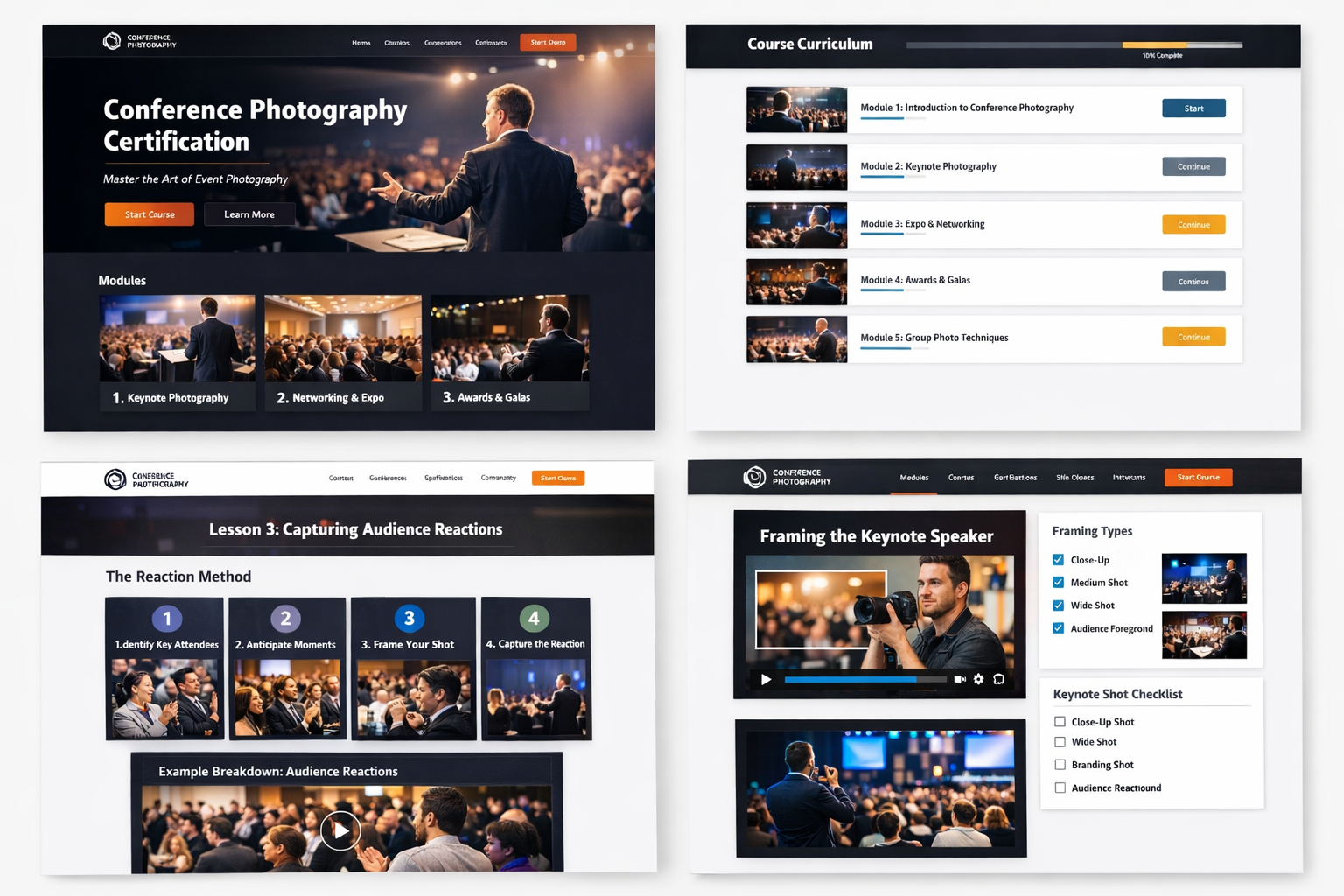
Conference Photography is the documentation of a business event/meeting, where people from the same company/industry or of similar interests gather together to network, discuss and celebrate.
Differences from weddings and other events
You might have had experience in weddings or other types of event photography which could be a good anchor to compare how conference photography differs
Weddings
Highly emotional and personal
Focused on a small number of people
Carefully curated moments
Photographer controls positioning more
Conferences
Fast paced and logistical
Hundreds or thousands of subjects
Multiple simultaneous activities
Photographer must move quickly and independently
At conferences, photographers must prioritize speed, awareness, coverage, and brand representation because events move quickly and many important moments happen simultaneously. Speed is essential to capture fleeting moments like speaker gestures, audience reactions, and networking interactions before they pass. Awareness means constantly understanding the schedule and environment so photographers can anticipate key moments instead of reacting too late. Coverage ensures all important aspects of the event are documented, including speakers, attendees, networking, sponsor activations, and the overall atmosphere. Brand representation requires photographers to frame images in a way that highlights the professionalism of the event and the visibility of sponsors, ensuring logos, signage, and branding appear clearly and positively. Together, these priorities ensure the photos not only document the event but also serve the client’s marketing and promotional needs.
What clients actually use conference photos for
The purpose of conference photography is to capture visual proof of the event’s value, energy, and scale so organizers, sponsors, and attendees can promote and relive the experience. These photos are used for marketing future events, social media, press coverage, sponsor reports, and company branding. They show full rooms, engaged audiences, networking moments, speakers, and sponsor activations, helping demonstrate that the event was successful and worth attending. In many cases, the images created during a conference become long-term marketing assets that help sell the next event, extend the reach of the brand, and provide attendees with shareable moments that amplify the event’s visibility
Understanding event schedules and flow
Conference photographers must understand how events unfold throughout the day. Unlike weddings, conferences run on tight schedules with overlapping sessions.
Below are some of the common types of programming you can expect in a typical conference day:
Morning
Morning Activity (Yoga/Bike Rides/Tour)
Registration (Arrival)
Breakfast networking
Opening keynote
Midday
Breakout sessions
Panel discussions
Executive sessions
Expo floor activity
Sponsor booths
Afternoon
Workshops
Product demos
Meet and greets
More sessions
Evening
Cocktail receptions
Award ceremonies
After parties
Dinners
Photographers must constantly balance:
Planned schedule coverage
Capturing candid networking moment
Covering sponsor deliverables
Responding to last-minute schedule changes
At Lumetry, photographers are expected to:
Review the run of show
Know the priority sessions
Anticipate important moments before they happen
Great conference photographers read the room and stay ahead of the schedule.
The Lumetry Standard
Lumetry’s reputation is built on speed, professionalism, and consistency. And most importantly, client experience.
Every photographer representing Lumetry is expected to maintain these standards.
Professional Presence
Dress appropriately for the event (Production Black or Provided uniforms)
Be courteous and approachable
Represent the Lumetry brand well
Reliability
Be on time and ready before coverage begins
Understand the schedule
Communicate with the team
Be reachable and available
Expect changes
Technical Consistency
Images should be:
Sharp
Well exposed
Color balanced correctly
Framed cleanly
Free of distractions
Efficiency
Lumetry systems allow images to be delivered quickly. It is important to capture images that are ready to publish and consistent with the brand’s style.
AI BOOTH LUMETRY - 4K